- 4D Real Estate's Weekly Roundup
- Posts
- Boise’s New Construction Boom: What It Means for Buyers and Sellers
Boise’s New Construction Boom: What It Means for Buyers and Sellers

Donna Wade
October 01, 2025
What’s The Tea with 4D? 🍵
One thing I love about living and working in Boise is how our city keeps growing — not just in size, but in possibility. Lately, I’ve been noticing something exciting: new construction is back in a big way across the Treasure Valley.
Builders are responding to steady demand and the fact that inventory, while improving, is still below what our community needs. Driving through Meridian, Kuna, and parts of West Boise, you can see entire neighborhoods springing up — from thoughtfully designed starter homes to higher-end communities with trails, parks, and shared spaces.
Why this is good news for buyers:
More options. After years of slim pickings, it feels refreshing to have real choices again.
Modern efficiency. New homes bring energy-efficient designs, smart-home features, and layouts that fit how families live today.
Incentives. Many builders are offering rate buydowns or closing cost help to get buyers in the door — perks you rarely find in resale homes.
Why it’s good news for sellers:
A healthier market. More inventory brings balance, which means serious buyers are out and shopping.
Move-up opportunities. Sellers who want to trade their current home for something new have a real path forward without feeling “stuck.”
Neighborhood vitality. New construction attracts energy and amenities that benefit surrounding areas too.
Boise’s growth is often painted as a challenge, but I see opportunity. More homes on the ground mean more pathways for people to put down roots here — and that’s what keeps our market vibrant and our community thriving.
If you’ve been curious about new construction opportunities, now might be the perfect time to explore. Whether you’re dreaming of something brand-new or simply wondering how these developments might affect your neighborhood’s value, I’d love to help you navigate it.
Thinking about your next steps in real estate? Let’s meet for coffee or tea to discuss your plans—my treat! 🧡
Whether you’re buying, selling, or just exploring possibilities, I’m here to offer clear guidance and help you feel confident moving forward.
Use the button below to pick a date and time that works for you. Once booked, I’ll reach out directly to confirm the details, and we’ll go from there.
Now is the time to focus on your real estate plans and turn them into reality. Let’s make it happen together! 🏘️
Effects in the Residential Market (Housing) of the Recent Fed Cut to Interest Rates
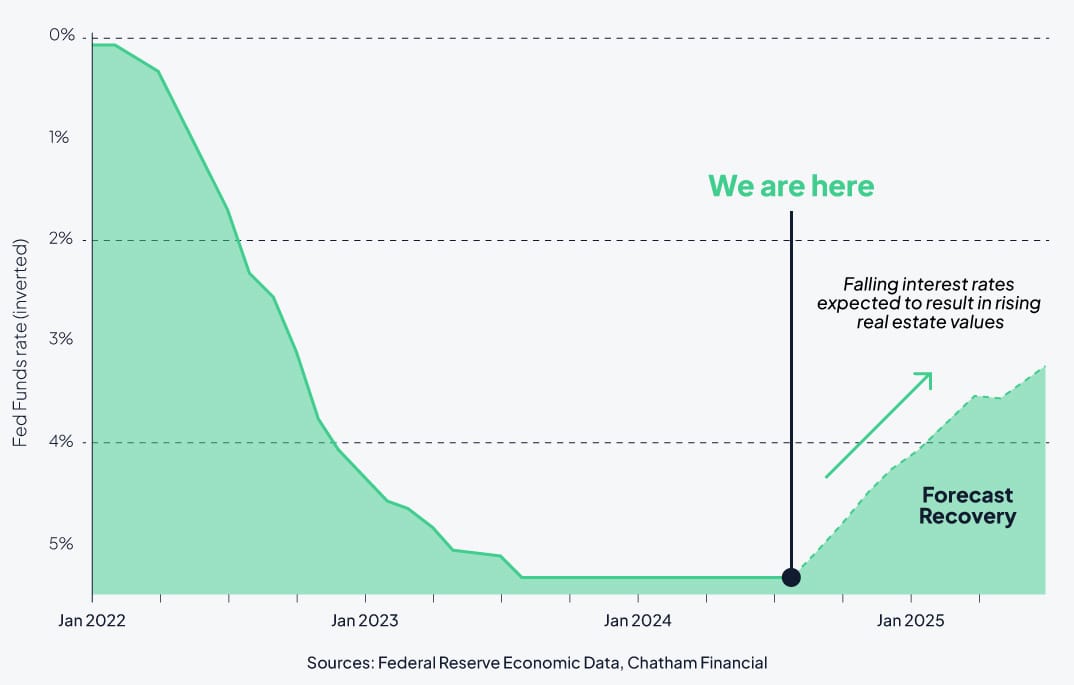
The Fed’s interest rate cuts have been highly anticipated. But what does it mean for the real estate market? Take a read.
Mortgage Rates & Borrowing Conditions
Mortgage rates have already begun to ease. Before the Fed’s cut, the average 30-year fixed mortgage rate was ~6.35 %, its lowest in nearly a year.
After the Fed move, some market watchers anticipated further declines, though many caution that much of the rate cut was “priced in” ahead of time, limiting the margin for further drops.
But mortgage rates don’t always move in perfect lockstep with Fed policy. For example, long-term yields are affected by inflation expectations, global capital flows, and risk premiums.
Thus, while the Fed cut provides tailwinds, the magnitude of relief for homebuyers depends heavily on broader yield curves and market expectations.
Demand, Affordability & Buyer Behavior
Lower financing costs expand the “affordability envelope” — buyers can qualify for larger loans with the same income or take on the same loan with a lower monthly payment.
However, persistent high home prices and limited inventory still strain affordability. Even with rate relief, many buyers remain squeezed.
The “lock-in effect” is a factor: many homeowners secured lower fixed rates in prior years and are reluctant to sell and give up those financing advantages. That keeps supply tight.
Slower home price growth: Some markets are already experiencing cooling in appreciation. For example, price gains in July 2025 were modest (1.7 % year-over-year) in the Case-Shiller index.
Transactions & Sales Volume
Existing home sales dipped slightly in August 2025 (–0.2 % to an annualized 4.00 million units), reflecting lingering affordability challenges despite the rate cut.
The median home price in August rose 2 % year-over-year to $422,600, indicating that—even with slower gains—the stock of high prices continues to matter.
Mortgage rates remain “sticky” around the mid-6 % range. Analysts warn that until they move meaningfully lower, the relief to sales will be gradual.
Overall: The Fed’s cut is helpful, but it's only a partial remedy. The housing market is likely to respond gradually, with geographic and segmental variation (first-time buyers, move-up buyers, entry-level segments may see more benefit).